
Which Foods Are Most Corrosive for Knife Steel?
Today we want to share something that many cooking enthusiasts discover far too late: knives are not only damaged by poor maintenance, impacts, or improper sharpening. There are also certain everyday foods that can directly affect the condition of the blade and gradually speed up its wear without us even noticing.
Tomatoes, onions, and lemons are some of the most common ingredients in our recipes, yet they can become true “silent enemies” of the knives we keep at home. Yes, you read that right. But don’t worry — there’s no need to panic. This is not about avoiding these foods, but rather understanding how they react when they come into contact with knife steel and learning the habits that can help prevent damage. That is the real key.
As kitchenware experts, we want to explain which foods are the most corrosive for knives, why this happens, and how you can prevent it in order to keep your tools in excellent condition for much longer.
Why Are Some Foods Corrosive to Knives?
First of all, it’s important to understand why this corrosion happens in the first place. Corrosion occurs when certain chemical components react with the metal of the blade. In the kitchen, the main culprits are acidity, moisture, and salt.
To make it easier to understand, when a knife stays in contact for too long with acidic or salty foods — especially if it is not cleaned shortly afterward — the steel can gradually begin to deteriorate. The good news is that there are several warning signs that can help you spot the problem early. You may notice small stains appearing on the steel, a loss of its usual shine, tiny rust spots, or even a decline in the sharpness of the blade.
The type of steel, the condition of the knife, and the maintenance routine you follow also play a key role in determining how vulnerable the knife is to corrosion.
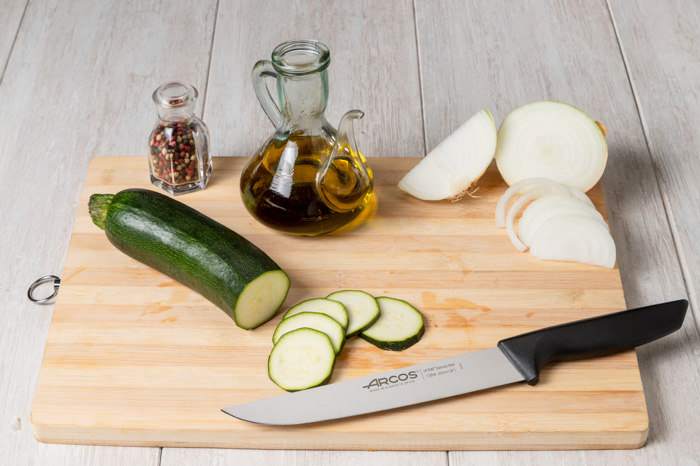
The Most Corrosive Foods for Your Knife Steel
Not all ingredients affect a knife blade in the same way. Some foods are far more corrosive due to their natural composition. Let’s get straight to the point so you can clearly identify the most common ones — especially the ingredients we regularly use when preparing our favorite meals.
#1 Lemon and Other Citrus Fruits
Lemon is one of the clearest examples, as we mentioned at the beginning of this guide. Its high citric acid content can react quickly with steel, especially if the knife is left wet or dirty after use.
The same applies to other citrus fruits and acidic products such as lime, orange, grapefruit, or highly acidic vinegars.
What’s the real issue? Without even thinking about it, many of us cut these foods and then leave the knife sitting on the cutting board or in the sink for several minutes before cleaning it. That’s a habit worth avoiding.
#2 Tomato
Another classic food that can affect knife steel. Its acidity, combined with constant moisture, can encourage small signs of oxidation if the blade is not cleaned properly afterward.
Tomatoes also come with another challenge: they put a lot of strain on the knife’s edge. When a knife isn’t properly sharpened, many people end up pressing too hard or sawing through the surface, which wears down the blade much faster.
#3 Onion and Garlic
Most people associate these ingredients with their strong smell, but they also contain sulfur compounds that can affect certain types of steel if the knife is not cleaned correctly after use. So it’s important to pay attention to this as well.
#4 Very Salty or Pickled Foods
Salt combined with moisture is extremely aggressive toward all kinds of knife blades. Pickles, anchovies, olives, and other marinated foods can speed up the corrosion process if the steel remains in prolonged contact with salt.
Does a New Knife Corrode the Same Way as an Old One?
Not really, and there’s a good reason for that. A knife that is relatively new, well cared for, and made from steel in good condition will usually resist these corrosive agents much better. On the other hand, when a knife already has micro-scratches, small chips, worn edges, or damaged areas, corrosion can spread much more easily and accelerate the problem.
That’s exactly why we always stress the importance of proper maintenance. A knife that is cleaned and cared for correctly will not only cut better, but will also be far more resistant to moisture, acids, and the everyday wear that naturally comes with regular use.
Our advice is simple: never leave your knife wet. It’s much better to wash it by hand instead of putting it in the dishwasher. Never store it while it’s still damp, and definitely don’t leave acidic residue sitting on the blade.
If you still have questions, here’s a complete guide on how to properly care for your knives.
Tal vez también te interese:
Arcos Non-Toxic: Our Guide to Toxin-Free Cookin
We are becoming increasingly conscious of our diet. We read food labels over and over, look for higher-quality ingredients, opt for organic products, and try to maintain a balanced diet. However, there is still one aspect of our cooking that we often overlook: choosing the right cooking utensils.
Types of knife holders for different kitchens
Durante años, los cuchillos han estado siempre fuera del alcance de cualquiera que pasará por nuestra cocina. Es más, solo los veíamos justo cuando nos tocaba utilizarlos. Pero esto está cambiando por completo, solo hay que echar una simple vista en las cocinas modernas para ver que hoy ya están completamente integradas en su diseño, ocupando incluso un lugar protagonista en nuestras encimeras.

Types of honing steels: when and how to use the one you need
At some point in a knife’s lifespan, it stops cutting as well as it did when it was first used.