
How to extend the life of your non-stick pan and prevent it from losing its properties
Anyone who has a non-stick frying pan in their kitchen knows how convenient it is for everyday use: you cook with less oil, food doesn’t stick, and it’s quicker to clean. But unfortunately, it’s not all advantages. You also know—or we’ll tell you now—that over time, these types of pans start to lose their magic.
To be completely honest, the reality of non-stick pans is that they are, to some extent, consumable items. However, the difference between your frying pan lasting just a few months or staying with you in your kitchen for several years really comes down to use, care, and maintenance. We can assure you that with a few simple habits, you can significantly extend its lifespan and keep its properties almost intact.
Today, our experts walk you through this complete guide on how to do it step by step: from temperatures and oils to utensils, cleaning, and various tips to avoid scratches or hot spots.
Types of non-stick frying pan: why the material matters
Before getting into the details and talking about the care you need to follow with your non-stick pan, it’s important to understand that not all of these pans are exactly the same. There are different types, and for that reason, it’s essential to learn what their differences are:
- Traditional non-stick pans (PTFE): very lightweight, effective, and extremely convenient for everyday use.
- Ceramic: quite a bit more heat-resistant, although it’s true that they tend to wear out sooner if they are not cared for perfectly.
- Reinforced multilayer: very durable and resistant to intensive use.
Regardless of the model you use at home, the advice will always be the same: the coating needs care and maintenance. Even the most robust pans can last much longer when used correctly. And if we’re talking about professional series, such as the Samoa pans and casseroles, even more so!
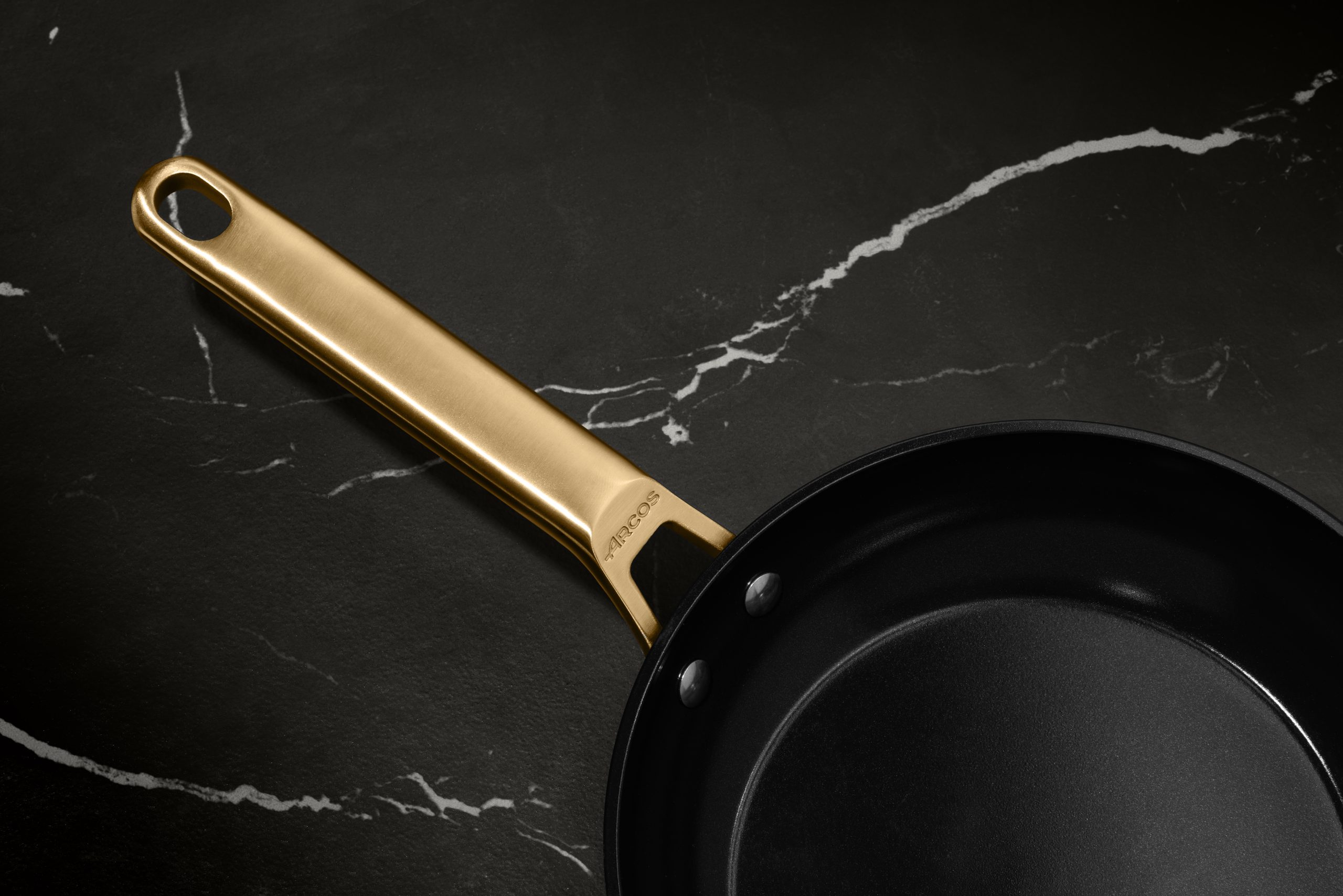
Recommended temperatures: the mistake that shortens its lifespan the most
Contrary to what you might think, the biggest enemy of non-stick coatings is not use itself, but excessive temperature. Incredible, right? Well yes: when using this type of pan, you should avoid, above all, heating the pan empty over low heat, cooking over maximum heat, or using it for searing at extreme temperatures. Any of these three things will, over time, cause serious problems for the lifespan of your pan.
To prevent this from happening, our advice is to preheat over medium heat, adjust the temperature according to the food you are going to cook, and always use medium or medium-low heat for the vast majority of your recipes.
A useful tip is that if you really need high heat for cooking, it is better to use a stainless steel pan. That way, you avoid using the non-stick pan for something it is not really designed for. Overheating ends up wearing down the coating, which creates hot spots and quickly reduces its effectiveness.
What oil to use, and which one you should avoid
Oil is a factor that affects the care of your non-stick pan more than it may seem. It works well with mild olive oil, sunflower oil, and coconut oil. However, it is not very compatible with non-stick sprays, since these often leave invisible residues that, over time, form a sticky film that is hard to remove.
Tip: use small amounts and remove as much as possible with a special non-stick pan spatula or with the help of paper towels. It works wonders.
How to wash a non-stick frying pan properly
Yes, people often buy a non-stick pan for its many benefits and yet most don’t know how to wash it properly. That small habit can make a big difference to its lifespan.
As experts, we’d tell you to let it cool before washing it, always use warm water and mild soap, and clean it with a soft sponge. Make sure it is completely dry before storing it. If you follow these simple steps, your new pan will stay clean perfectly.
Of course, forget about putting it in the dishwasher, using metal scouring pads, or exposing it to the sudden temperature changes we often use with other kitchen accessories. Although many of these pans are marked as dishwasher-safe, washing them by hand will extend their life, trust us.
And if you start to notice a sticky layer or a drop in performance, it is quite likely that some grease has built up. In that case, try a little baking soda — it should come off easily.
Now that you know all these tricks, follow them closely and make your non-stick pan last for many years in your home.
Tal vez también te interese:
Arcos Non-Toxic: Our Guide to Toxin-Free Cookin
We are becoming increasingly conscious of our diet. We read food labels over and over, look for higher-quality ingredients, opt for organic products, and try to maintain a balanced diet. However, there is still one aspect of our cooking that we often overlook: choosing the right cooking utensils.
Types of knife holders for different kitchens
Durante años, los cuchillos han estado siempre fuera del alcance de cualquiera que pasará por nuestra cocina. Es más, solo los veíamos justo cuando nos tocaba utilizarlos. Pero esto está cambiando por completo, solo hay que echar una simple vista en las cocinas modernas para ver que hoy ya están completamente integradas en su diseño, ocupando incluso un lugar protagonista en nuestras encimeras.
Types of honing steels: when and how to use the one you need
At some point in a knife’s lifespan, it stops cutting as well as it did when it was first used.