
Design as a Driver of Value in Retail: From Creative Collaboration to End-Consumer Demand
How product design, in-store presentation and collaboration with architecture and design studios help buyers reduce risk, differentiate their product range and build brands capable of generating demand.
Design Is Not Decoration: It Is a Business Decision
In retail, design is too often mistaken for the aesthetic layer added at the end of the process. Colours, shapes and finishes are discussed once the product has already been defined and all that remains is to make it more appealing. However, design that creates value begins much earlier. It influences function, ergonomics, materials, the way the range is structured and understood, product presentation, brand storytelling and the experience consumers have from their first interaction through to everyday use.
For a purchasing director or product manager, this distinction is essential. A well-designed proposition is not merely more attractive: it is easier to understand, defend internally, implement, sell and sustain over time. It reduces dependence on price as the sole argument and provides visible reasons to allocate space, build a category and maintain a clear market position. In other words, it transforms a product into a complete commercial proposition.
In categories such as cutlery, cookware, kitchen utensils and flatware, design also has a unique ability to connect the technical with the emotional. A knife must cut effectively and be safe and comfortable to use, but it can also convey precision, tradition, modernity or a sense of naturalness. When form, material, balance, finish, packaging and display all tell the same story, consumers understand the product’s value even before using it.
The B2B2C Approach: Designing for the Buyer, the Seller and the User
Retail-focused design must respond to a complex decision-making chain. The manufacturer develops the proposition; the professional buyer decides whether it should be included in the assortment; the distributor implements and activates it; and the end consumer ultimately confirms or rejects all those decisions through their purchase. Designing solely for the end user is not enough if the proposition does not help the buyer justify it or the retailer present it clearly.
The B2B2C approach requires three questions to be addressed simultaneously. For the purchasing team: what category problem does it solve, and why does it deserve space? For the retailer: how will it be presented, explained, replenished and activated? For the consumer: why is this option relevant, desirable and right for me? Design works when all three answers reinforce one another rather than compete.
This perspective changes the commercial conversation. The manufacturer stops offering isolated product references and begins presenting an architecture of value: product, identity, range, materials, display tools, content and sales arguments. For the purchasing manager, the proposition becomes easier to assess because they can visualise its entire journey, from the assortment meeting to the consumer’s basket.
The Real Pain Points Faced by Purchasing Directors and Managers
Purchasing teams receive more proposals than they can incorporate. They must make selections based on incomplete information, anticipate product turnover, protect margins and prevent the assortment from becoming a collection of similar products. One of their main challenges is a lack of differentiation: suppliers may present strong product features, but without a clear reason why the end customer should choose them over alternatives already available.
Another problem is complexity. Ranges with too many references, difficult-to-interpret codes, barely visible differences or technical arguments that consumers do not understand all increase risk. Buyers know that a confusing collection requires more training, more signage and greater involvement from sales staff. If the product does not explain itself, its potential depends too heavily on flawless in-store execution, which is difficult to guarantee across large retail networks.
There is also constant pressure on space, inventory and profitability. Every new addition must demonstrate that it can generate turnover, increase basket value, deliver margin or attract a relevant customer segment. Design does not eliminate these constraints, but it can reduce them: it organises the range, differentiates functions, makes value visible, encourages cross-selling and supports a compact, coherent retail display.
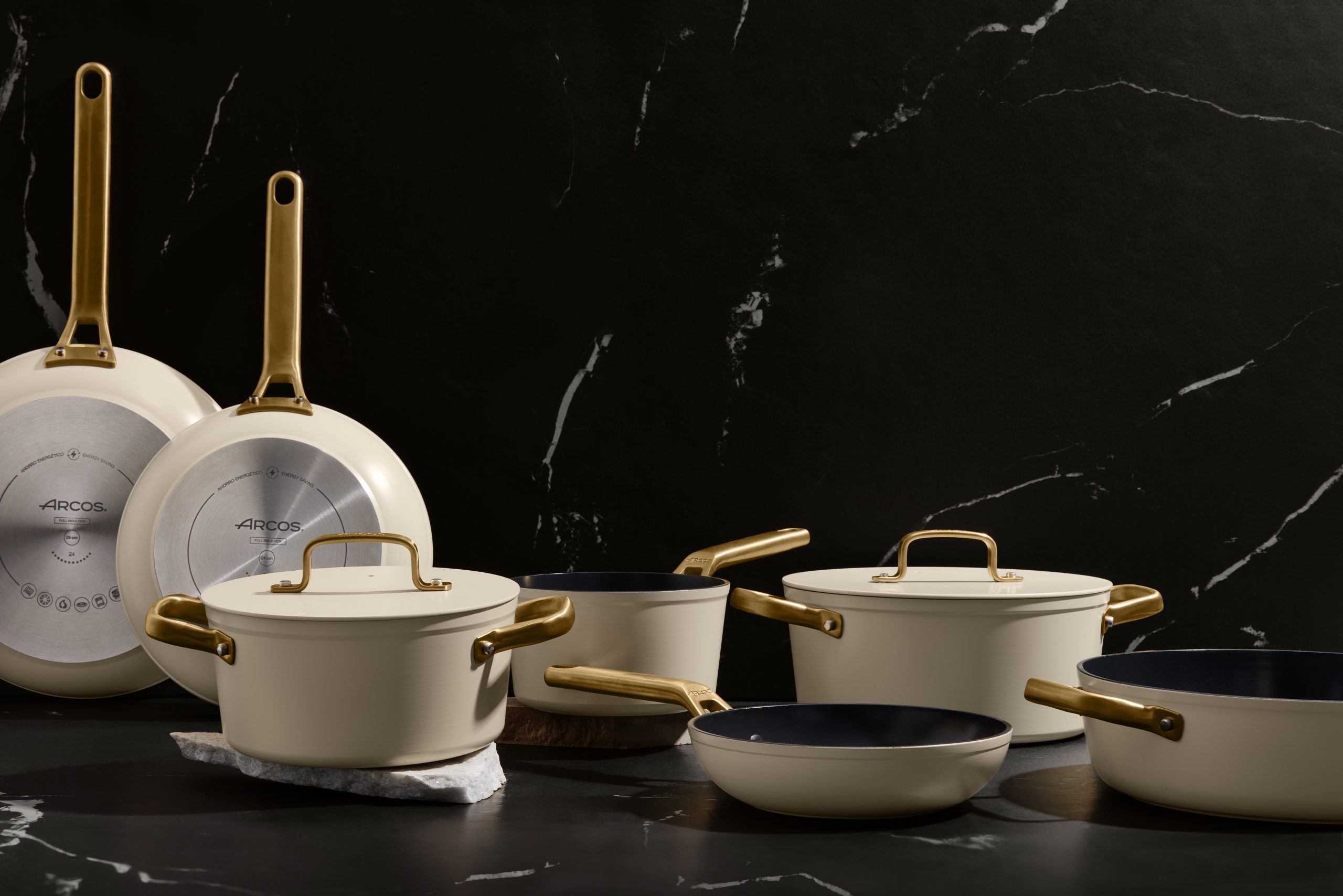
Why Collaborate with Architecture and Design Studios
Collaboration with architecture, industrial design, interior design or creative direction studios should not be understood as a cosmetic gesture or as an attempt to associate a product with a prestigious name. Its real value emerges when it brings an external perspective capable of connecting product, space, brand culture and user behaviour. These teams work with proportion, circulation, materials, light, hierarchy and experience: decisive variables in transforming a collection into a recognisable universe.
A product designer can challenge the ergonomics, simplify components or find a clearer way to communicate function. An architecture studio can imagine how the proposition works in a real space, how products should be grouped, from what distance they can be recognised and how they relate to other materials. A branding team can translate all of this into codes that the brand can sustain over time. Collaboration is valuable when it integrates these disciplines, not when it merely adds a designer signature at the end of the process.
For the buyer, the involvement of external specialists can indicate depth, provided there is a tangible reason behind it. The partnership should result in improved usability, stronger differentiation, a more powerful retail implementation or a story that is relevant to the customer. The studio’s name may generate interest, but the value proposition must continue to work even when that name is removed from the headline.
Designing with External Studios Without Losing Brand Identity
Effective creative collaboration does not mean handing the brand over to the designer. The manufacturer contributes technical expertise, history, processes, market knowledge and an identity built over time. The studio contributes methodology, perspective and the ability to synthesise. The best solution emerges from dialogue between the two, supported by a brief that defines the commercial challenge, target audience, production constraints and positioning ambition.
The most common risk is creating an outstanding piece that feels disconnected from the rest of the catalogue. It may attract attention at launch, but later prove difficult to develop into a wider family or relate clearly to the brand. To prevent this, permanent codes should be defined: principles of form, materials, details, colours, language and levels of innovation. The designer can reinterpret them, but should not ignore them.
This continuity is particularly important in retail. Buyers value newness, but they also need stability. A collection must be able to grow, incorporate new product types and remain recognisable. When collaboration creates a system rather than a single object, it extends the commercial life of the project and reduces the risk of the launch depending on a passing trend.
From the Individual Object to a Collection System
Design becomes more powerful when it stops working product by product and begins organising a family. A well-structured collection allows each product to have its own personality while retaining a clear sense of belonging. Consumers recognise the range, understand the different functions and can begin with one item before purchasing additional pieces later. For the retailer, the family creates a stronger presence and enables a more orderly display.
The system must determine which elements remain consistent and which can change. The geometry of the handle, a particular transition, a selection of materials or a visual code may remain constant, while size, blade, capacity or use varies. This combination of consistency and differentiation makes the range easier to navigate and avoids two extremes: a chaotic assortment or one so uniform that every item appears identical.
From a purchasing perspective, the collection approach improves the ability to create different assortment levels. It allows buyers to select an entry point, a core range and extensions; create sets; encourage complementary sales; and adapt the implementation to the size of each store. Design therefore becomes a category management tool, not simply a product attribute.
Design That Makes Choosing Easier and Reduces Purchase Risk
A product may be excellent and still lose the sale if consumers do not know which option to choose. In technical categories, the abundance of shapes, sizes and uses can create uncertainty. Good design reduces this friction through visible differences, clear hierarchies and consistent codes. Form can indicate function, colour can identify a family, and packaging can explain the main use without turning the front panel into an instruction manual.
This clarity also reduces returns and frustration. When the expectations created by the presentation match the actual experience, trust increases. Consumers understand what they are buying, what it is designed for and what level of performance they can expect. In ecommerce, where the product cannot be handled before purchase, the clarity of the design and the quality of its visual representation become even more decisive.
For the purchasing manager, a proposition that is easy to choose is also easier to scale. It is less dependent on expert sales staff, performs better in self-service environments and requires fewer corrective elements. Clarity does not weaken positioning; on the contrary, it communicates confidence and expertise within the category.
How Design Stimulates End-Consumer Demand
Demand is not driven by promotions alone. It also grows when consumers discover a possibility they had not previously considered, understand a difference more clearly or feel that a product fits their identity. Design creates this impulse by transforming a functional need into a desirable choice. It allows an everyday tool to be perceived as something to enjoy, display, give as a gift or keep for years.
The emotional connection can be built around different territories: professional precision, Mediterranean cooking, craftsmanship, innovation, sustainability, nature or contemporary design. What matters is that the chosen territory is credible and supported by the product itself. A story without evidence generates only brief attention; a story embodied in form, texture, origin and experience generates preference.
Design also encourages conversation. A distinctive object is photographed, recommended and recognised. In home categories, where products become part of the consumer’s personal space, this social dimension is particularly relevant. Consumers are not simply purchasing performance; they are adding an element to their kitchen and, to some extent, expressing a way of life.
Retail Presentation: The Space Also Designs the Product
The perception of a product changes according to the context in which it is presented. A grouped collection communicates greater intention than several scattered references. Display materials aligned with the product can reinforce its origin and positioning. Lighting, height, order, rhythm and negative space all influence visibility and perceived quality.
This is where collaboration with architecture and interior design studios can deliver direct value. The objective is not to build expensive installations for every store, but to develop adaptable implementation principles: modules, display units, material combinations, grouping guidelines and visual resources. A strong system preserves the brand identity across different formats, from a premium corner to a compact shelf display.
The buyer needs to be able to visualise this implementation. A strong commercial proposition should therefore include visualisations, options based on the available space, a recommended assortment and a clear replenishment logic. When the supplier demonstrates how the space will be used and how the collection will be perceived, uncertainty is reduced and the internal decision-making process becomes easier.
Product Design as a Signal of Value Before Use
Most products are judged before they are used. Consumers assess proportions, materials, texture, colour, joints, perceived weight and the precision of the details. Within seconds, they form an expectation of quality. Design therefore acts as a signal: it helps people interpret what they cannot yet verify, such as durability, performance or the care taken during manufacturing.
In a kitchen knife, for example, the transition between blade and handle, the continuity of the lines, the choice of wood or polymer, the finish of the rivets and the sense of balance communicate as much as a technical specification sheet. Design does not replace performance, but it makes it visible and understandable. When form follows function, technical quality is no longer hidden and becomes a perceived source of value.
For the professional buyer, this ability is important because it narrows the gap between the commercial argument and the public’s response. A proposition that clearly communicates its positioning requires less explanation and is better able to justify its price. If the product appears generic, any premium message becomes fragile; when every formal decision is aligned with the promise, the brand gains credibility.
Consistency Across Product, Packaging, Display and Communication
Value is lost when each element speaks a different language. A sophisticated product inside generic packaging, a nature-inspired collection displayed on a cold, impersonal fixture, or an emotional campaign supported by purely technical photography all create dissonance. Consumers may not consciously identify the problem, but they sense that the proposition does not quite fit together.
Consistency does not mean repeating the same device everywhere. It means sharing a central idea. If the product is inspired by honest materials, craftsmanship and durability, that identity can be translated into a colour palette, textures, a photographic language, a display approach and a tone of voice. Each touchpoint adds a different layer, but they all build the same positioning.
For retail purchasing and marketing teams, this consistency provides an operational advantage. The collection arrives with a recognisable system that can be transferred to the shelf, window display, product page, seasonal campaign and social content. The less the retailer has to rebuild, the easier it is to activate the proposition and maintain consistency across channels and stores.
Omnichannel Retail: Design Must Survive the Thumbnail
Today, products are often discovered on a screen before they are seen physically. This means they must be designed with photography, video, overhead views, close-up details and marketplace thumbnails in mind. A highly subtle form may disappear; overcrowded packaging becomes illegible; and a family without clear visual codes can become confusing when displayed in a product grid.
Designing for omnichannel retail does not mean simplifying a product to the point of becoming generic. It means ensuring that its identity works at different scales and in different contexts. The silhouette, contrasts, distinctive details and consistency of the range must be visible both in a small image and in a physical display. Digital content can also reveal what the shelf cannot explain, including ergonomics, processes, materials and applications.
For the retailer, this preparation reduces costs and accelerates the launch. Consistent photography, videos, renders, clear product information and campaign assets allow the product to be activated without rebuilding all the content from scratch. Design therefore becomes a productive marketing platform rather than an image that works only in the manufacturer’s catalogue.
Design, Brand and Price Positioning
Price is easier to sustain when value is visible. A brand may explain that it uses better materials, more demanding processes or specialised manufacturing, but if the product and its presentation do not express that difference, consumers will compare primarily on price. Design translates attributes that are difficult to observe into understandable signals and helps prevent the category from becoming a promotional price war.
This does not mean that everything must look luxurious. Design must be appropriate to the positioning. A professional proposition may communicate robustness and precision; a domestic range may prioritise accessibility and ease of use; and a premium collection may focus on detail, materiality and experience. Credibility comes from the alignment between the promise, the target audience and the execution, not from decorative excess.
For purchasing teams, clearly expressed positioning makes it easier to build a price architecture. It helps them understand the role of each family, where it sits in relation to competitors and which customer it can attract. The brand gains a more clearly defined position, while the retailer benefits from an assortment with distinct price levels rather than products that cannibalise one another.
A Tangible Value Proposition for the Purchasing Manager
Design must translate into benefits that matter in a purchasing meeting. The first is visible differentiation: a reason why the proposition will not disappear among equivalent products. The second is ease of choice: a range that consumers can understand without constant assistance. The third is margin potential: a perception of value capable of supporting the price and reducing dependence on discounts.
The fourth benefit is space productivity. A coherent collection can be grouped together, create impact and encourage cross-selling without requiring a disproportionately large display. The fifth is activation potential: the retailer has access to materials, stories and opportunities for gift, home, cooking, design or seasonal campaigns. The sixth is reduced operational risk, thanks to clearly organised references, functional packaging and channel-ready content.
The final argument should not be that the product was designed by a prestigious studio, but that the collaboration solved specific problems. It improved ergonomics, simplified the range, created a distinctive presence, made the choice clearer or established a language that the retailer can activate. That is the difference between design as decoration and design as a commercial investment.
A Collaborative Model for Manufacturers, Retailers and Creative Studios
The strongest propositions can be developed through a collaborative approach. The manufacturer contributes the technical platform and brand vision; the studio translates the challenge into product and experience solutions; and the retailer provides knowledge of the shopper, display constraints and real category data. Bringing these perspectives into the process at the appropriate stages prevents the proposition from being designed in a commercial vacuum.
Collaboration does not require the retailer to become involved in every detail. It can be structured in phases: defining the problem, exploring concepts, technical validation, comprehension testing, developing the display proposition and planning the launch. At each phase, decisions are made according to clear criteria. The result is more robust because both consumer desire and the reality of the retail environment have been taken into account.
It is also important to agree which assets will support the launch. Delivering the product alone is not enough: imagery, sales arguments, training, display modules, digital content and an activation calendar are also required. When all parties understand how value will be created and captured, the collaboration ceases to be an image-building exercise and becomes a growth strategy.
How to Measure the Return on Design
Design should be assessed using business indicators, even though its full impact may not appear in a single metric. During the launch phase, businesses can measure buyer acceptance, speed of implementation, the percentage of references listed and the quality of the retail space secured. In-store indicators include product turnover, units per transaction, cross-selling, changes in the average selling price and the level of promotional support required.
In digital channels, businesses can analyse click-through rate, conversion, interaction with images, time spent on the page and creative performance. Returns, customer service enquiries and reviews are also relevant: they reveal whether the design has created accurate expectations and whether the experience fulfils the promise. For a collection, it is important to consider not only the performance of each individual product, but also the ability of certain references to drive sales of others.
Qualitative metrics complete the picture. Does the store team understand the range? Can the buyer explain its point of difference in one sentence? Can consumers identify the brand without seeing the logo? Does the proposition remain consistent across different channels? These questions reveal whether design is building a brand asset or has simply produced an attractive new launch.
Designing the Choice, Not Just the Object
Design creates value in retail when it connects the product with every decision that surrounds it. It helps the manufacturer express its capabilities, the buyer reduce uncertainty, the retailer present and activate the offer, and the consumer recognise a relevant choice. Its role does not end with the form of the object: it continues through the range, packaging, space, imagery and narrative.
Collaboration with architecture and design studios can accelerate this transformation, provided it begins with a real challenge and is integrated with the brand’s identity and technical expertise. The objective is not to appear more creative, but to become clearer, more useful, more recognisable and more difficult to replace. When design resolves the pain points of retail, it ceases to be an aesthetic opinion and becomes a competitive advantage.
For purchasing directors and managers, the most valuable proposition is one that arrives ready to perform: a relevant product, a clearly organised collection, an adaptable presentation, usable content and arguments capable of stimulating end-consumer demand. Ultimately, designing well means designing the choice. A better-designed choice is more likely to enter the assortment, gain space, sustain its price and remain in the consumer’s mind.
Tal vez también te interese:

The 5 Kitchen Knives You Actually Need (and How to Choose Them)
One for meat, another for fish, a special one for cheese, even one just for bread. We completely understand— before you know it, one of your kitchen drawers ends up overflowing with all kinds of knives. But if we’re honest with ourselves, how many of them do we actually use on a regular basis? We all already know the answer.

Which Foods Are Most Corrosive for Knife Steel?
Today we want to share something that many cooking enthusiasts discover far too late: knives are not only damaged by poor maintenance, impacts, or improper sharpening. There are also certain everyday foods that can directly affect the condition of the blade and gradually speed up its wear without us even noticing.

Ceramic non-stick frying pan: how non-stick coatings have evolved and what you should look for before buying
In current collections such as the Samoa professional series, the main focus is for these pans to combine good heat distribution, a modern non-stick coating, and ease and comfort in handling.