
The 5 Kitchen Knives You Actually Need (and How to Choose Them)
The truth is, you don’t need twenty different knives to cook well. What really makes a difference is having a carefully chosen core set of knives that can handle 90% of the tasks you actually do in an everyday kitchen. Let’s put together the perfect kitchen knife set without spending a euro more than necessary.
The Chef’s Knife or Santoku: The One Knife You Really Need
If we could only keep one knife for the rest of our lives, trust us — this would be the one. The chef’s knife, or its Japanese counterpart, the Santoku, is the true workhorse of any kitchen. And the reason is simple: with it, you can slice, chop, dice, and prep almost any ingredient you use day to day. Vegetables, meat, fruit, fish, fresh herbs — it handles just about everything.
The main difference between the two comes down to the blade shape. A classic chef’s knife has a more curved blade, which makes rocking motions easier while cutting. The Santoku, on the other hand, is slightly more compact and excels at precise, straight cuts.
When choosing one, pay attention to the blade length — most range between 18 and 20 cm — as well as factors like handle comfort, balanced weight, and how easy it is to maintain a sharp edge.
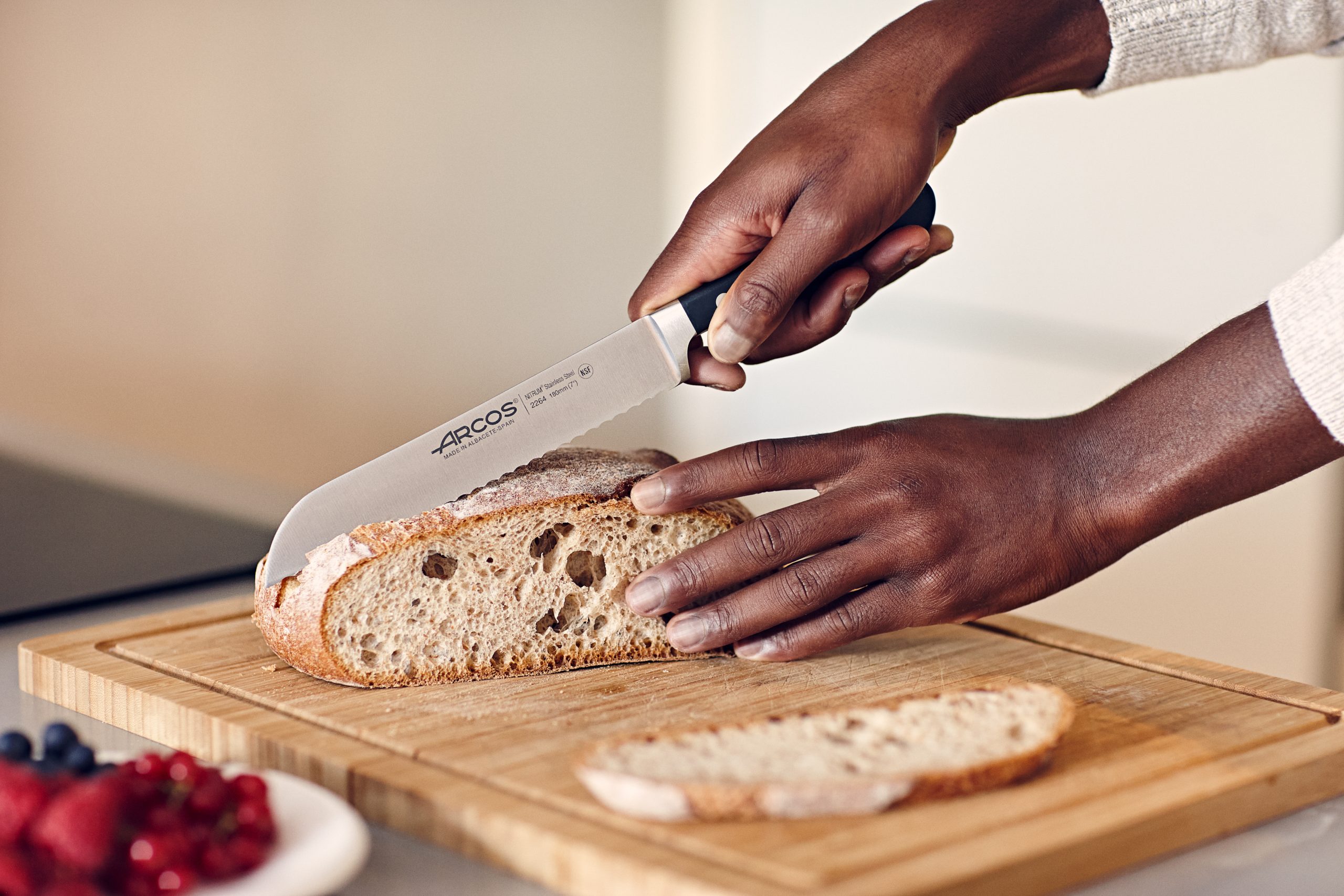
The Bread Knife: More Important Than You Might Think
A bread knife stands out thanks to its long, serrated blade, designed to glide through hard crusts without squashing the soft interior. And what many people don’t realize is that it’s useful for far more than just bread. It’s also perfect for slicing ripe tomatoes, cakes, fruits with tough skins, and even delicate foods that need a cleaner, smoother cut.
The most important thing to look for in this type of knife is the quality of the serration. For everyday use at home, a blade of around 20 cm is more than enough.
The Paring Knife: The Small One You’ll Use the Most
At first glance, it might not seem essential, but it’s actually one of the most useful knives you can have. You’ll see why very quickly.
A paring knife is perfect for all those small, precise kitchen tasks: peeling fruit, trimming vegetables, removing seeds, slicing strawberries, or handling ingredients safely in your hand.
Ideally, you want a short, lightweight, and easy-to-handle blade measuring around 8 to 10 cm.
The Filleting Knife: Precision at Its Best for Meat and Fish
Unlike a chef’s knife, a filleting knife is designed for flexibility and smooth, effortless cutting. Look for one with a blade that glides easily and gives you excellent control without needing to apply too much pressure.
The Utility Knife: The Kitchen’s All-Rounder
How to Build a Good Basic Knife Set
If you cook every day and want a practical setup, your essentials should be: a chef’s knife, a paring knife, and a bread knife. With those three, you’ll be able to handle almost everything.
If you mainly cook on weekends and genuinely enjoy the whole process, then it’s worth expanding that basic kit with a filleting knife and a utility knife. They’ll give you extra precision and make preparing recipes much more comfortable and enjoyable.
And if you have a small kitchen with limited space, a good Santoku knife, a paring knife, and a compact bread knife will cover virtually all your needs without overcrowding your drawers.
What Sets a Good Knife Apart from an Average One
Beyond looks and design, there are a few key details that truly define the quality of a knife. Our advice is to always choose one with a comfortable, ergonomic handle, a blade that holds its edge well, balanced steel construction, and materials that make sharpening and maintenance easy over time.
Don’t fall into the trap of buying oversized knife sets packed with pieces you’ll barely use. Instead, choose a collection that genuinely fits your needs and matches the kind of cook you are in the kitchen.
In the end, it’s not about owning more knives — it’s about having the right ones within reach.
Tal vez también te interese:
The 5 Kitchen Knives You Actually Need (and How to Choose Them)
One for meat, another for fish, a special one for cheese, even one just for bread. We completely understand— before you know it, one of your kitchen drawers ends up overflowing with all kinds of knives. But if we’re honest with ourselves, how many of them do we actually use on a regular basis? We all already know the answer.
Which Foods Are Most Corrosive for Knife Steel?
Today we want to share something that many cooking enthusiasts discover far too late: knives are not only damaged by poor maintenance, impacts, or improper sharpening. There are also certain everyday foods that can directly affect the condition of the blade and gradually speed up its wear without us even noticing.
Ceramic non-stick frying pan: how non-stick coatings have evolved and what you should look for before buying
In current collections such as the Samoa professional series, the main focus is for these pans to combine good heat distribution, a modern non-stick coating, and ease and comfort in handling.