
How to install and look after a magnetic knife rack without ruining the edge
Chances are you’ve never really thought about it, but a magnetic knife rack is one of those accessories that instantly levels up any serious kitchen: tidy, stylish, easy to clean… and your top‑tier knives always within reach. The catch is that both the way you install it and how you use it really matter, because if not, it can quietly become your edge’s worst enemy. We’re talking tiny knocks, constant rubbing, falls, even small household accidents. A nightmare.
The good news is that if you install it properly and stick to a couple of very simple habits, you can have a magnetic knife holder that’s perfect, safe and doesn’t compromise your knives’ cutting performance. At Arcos, as true knife specialists, we’re going to show you how to put it up and look after it without damaging the edge, thanks to this complete DIY guide that’s technical yet easy to follow. And we’ll even give you alternatives in case your wall is tiled or plasterboard.
Magnetic knife rack: real benefits and the one mistake that can end up ruining it
Before we get into the how‑to, it’s worth spending a few minutes really understanding why this system works so well and why you’ll want it in your kitchen:
- It stops your knives from banging around in drawers.
- It keeps the edge of your blades protected, as long as you use it properly.
- It improves hygiene. Drying is much better than in closed cutlery holders.
- It saves space on your countertop.
Visually, it’s much more convenient, because with a quick glance you can see everything you’ve got ready to use.
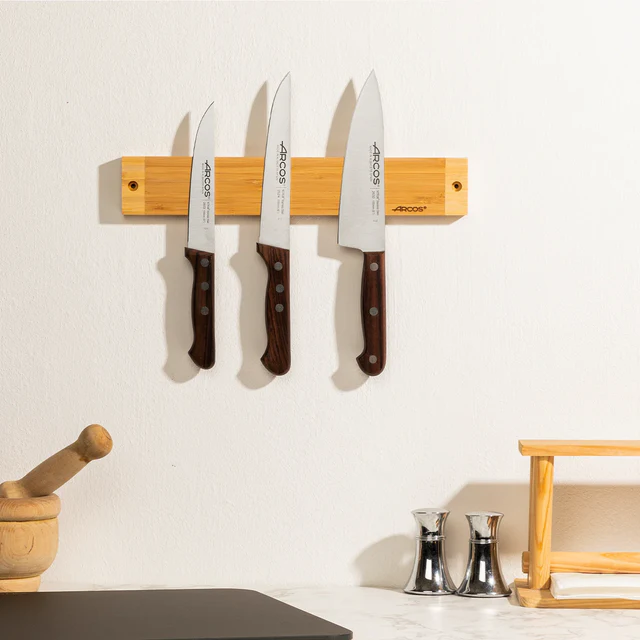
Ideal height: where to place your magnetic knife rack
This is one of the key things to get right, both for comfort and for safety.
For adults, we usually recommend placing the magnetic rack about 45–60 cm above the countertop. That’s the sweet spot for hanging and removing knives without having to lift your arm too high.
If you’ve got kids at home, try installing it a bit higher, ideally above their eye level. If that still doesn’t feel safe enough, another option is to place the rack in an area they can’t easily reach, like a high corner. You can also combine the magnetic bar with knives in protective sheaths to avoid any surprises. We all know how curious little ones can be.
One more thing: make sure the bar is always installed in a controlled traffic area, never near corners or edges where someone could brush against it or get hurt.
Distance and layout: spacing your knives so they don’t knock into each other
One of the keys to protecting the edge is making sure the blades never bang into each other. To avoid that, we recommend the following:
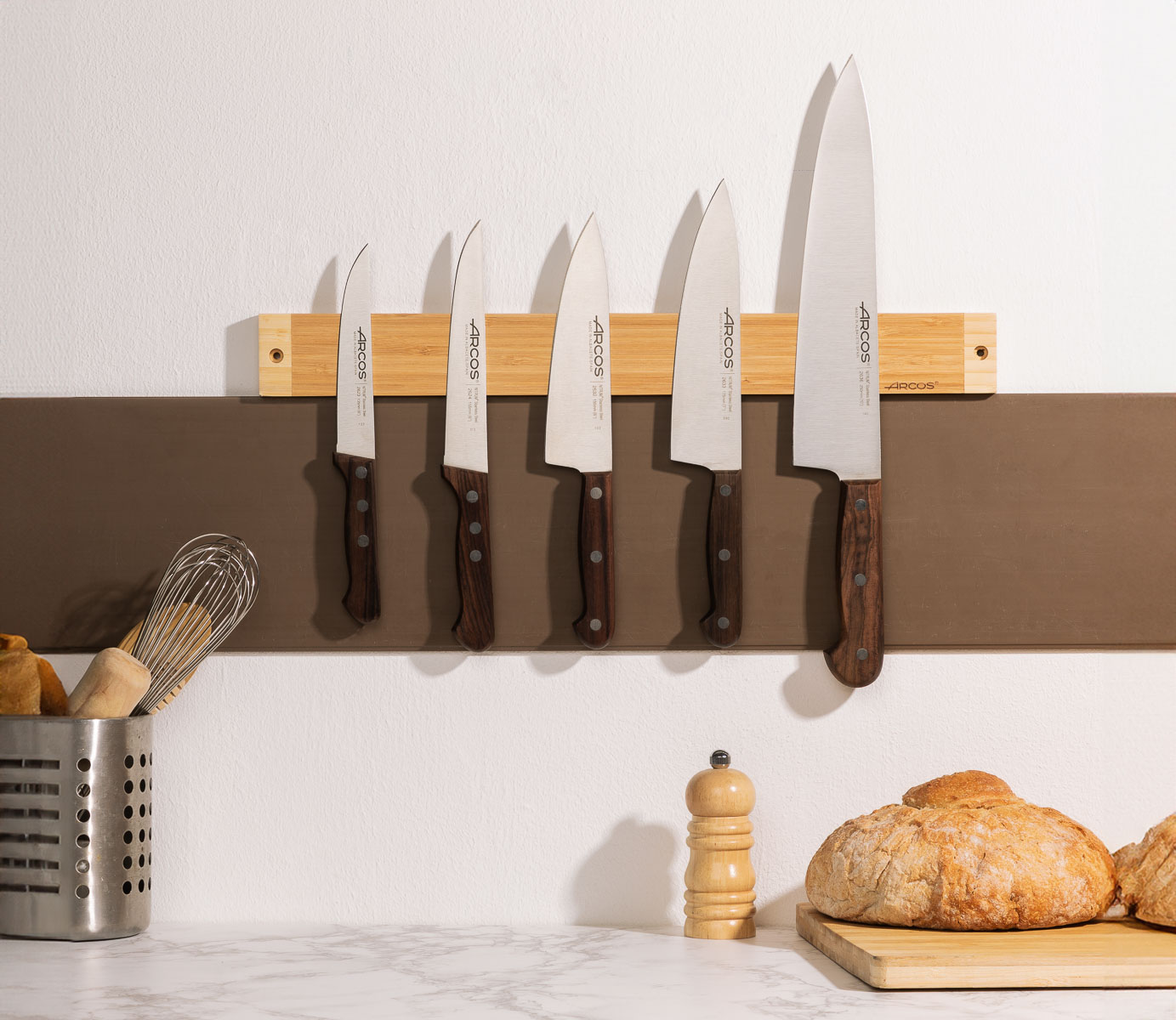
- Leave at least 2–3 cm between medium‑sized knives.
- For larger knives, like chef’s or ham knives, increase that gap to around 4–6 cm.
Place the heaviest knives in your collection either at the ends or in the center of the rack, but always with enough space around them.
And if, even following these tips, the bar still feels too crowded, the best solution is to add a second rack so you can store more knives easily and safely.
How to fix the rack without wrecking your wall
The goal is for your magnetic bar to be rock solid, straight, and 100% safe. To do that, you’ll need a few basic tools: a level, a drill with the right bit, wall plugs suited to your wall, a screwdriver or power driver, and a tape measure plus a pencil. You should tighten the screws until you feel everything is firm and the rack doesn’t wobble at all. But don’t overdo it, or you’ll damage the plug and it could start to sink over time. Worst‑case scenario: all your knives end up falling off. The key is to get a solid bar without warping the base or blowing out the plug.
- When it comes to hanging the knife, it’s best to follow these steps:
- First, place the spine of the knife (the non‑sharp side) against the magnet.
- Once it’s touching, gently rotate the knife so the rest of the blade sticks to the bar.
- Don’t throw the knife at the rack from a distance.
When you want to take it down, just grip the handle firmly and twist the knife upwards or sideways. Easy, right?
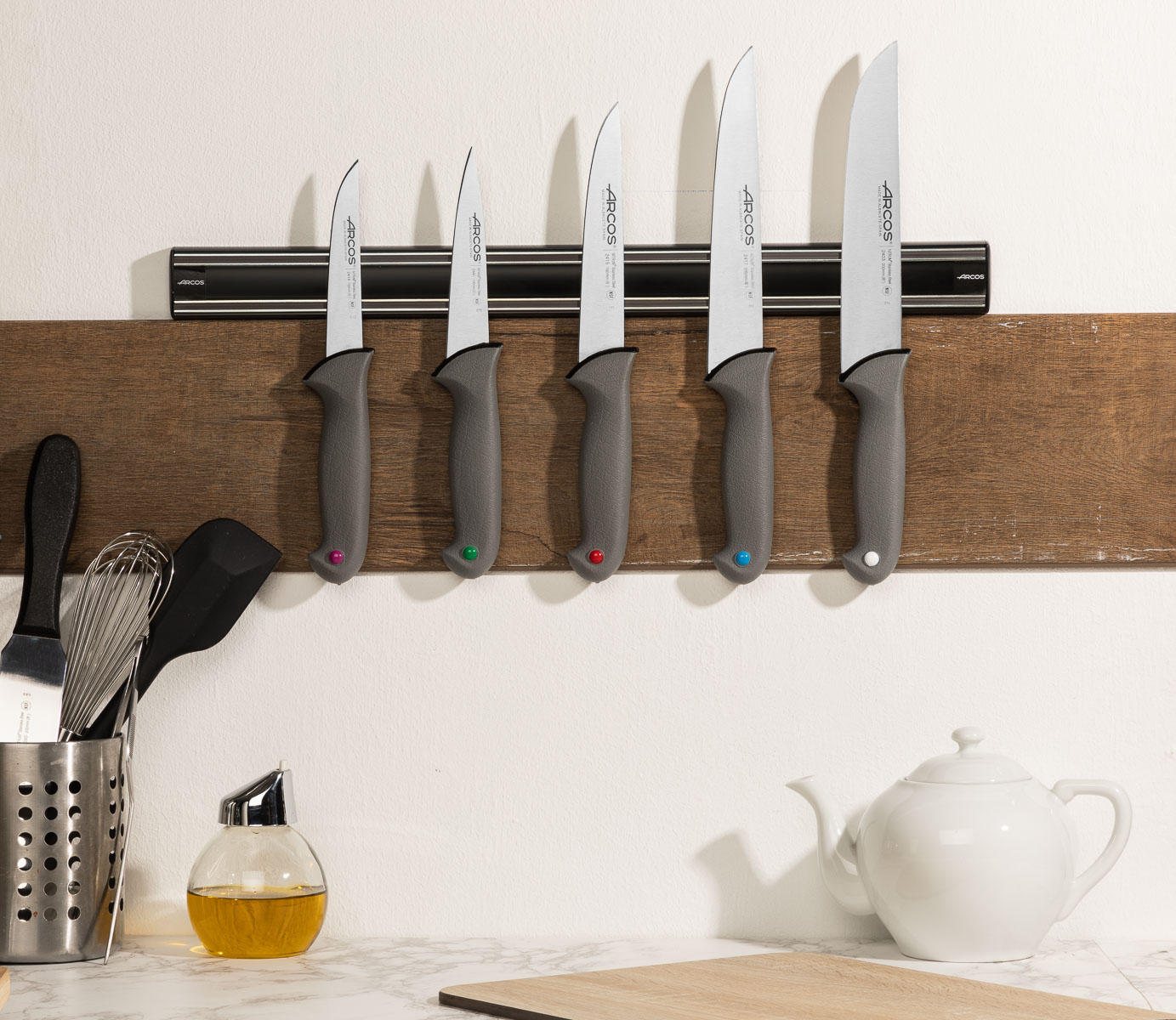
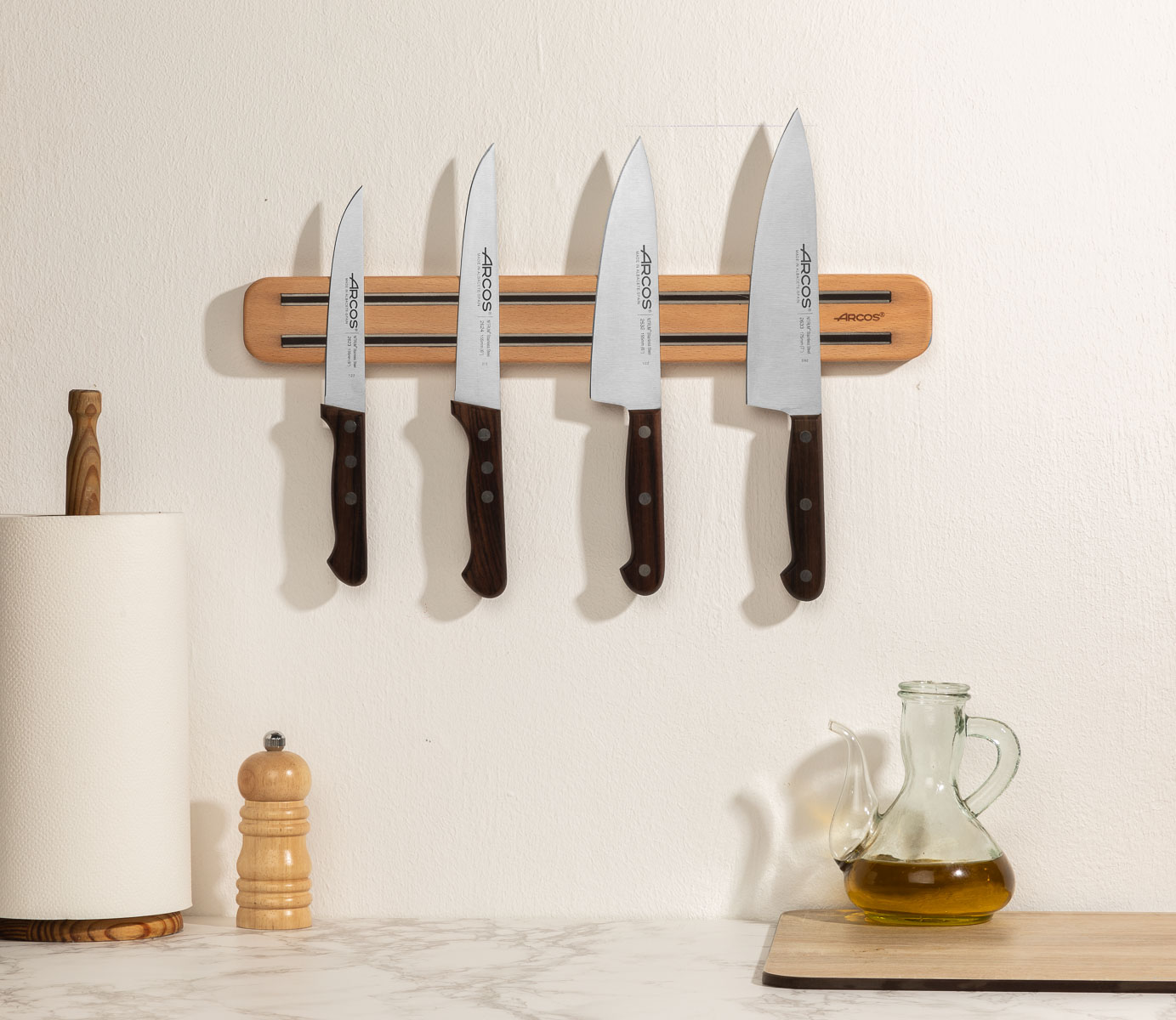
Installation depending on your wall
If your kitchen has the usual tiled wall, the best option is to drill into it very carefully. But if that doesn’t really appeal to you, go for a high‑strength adhesive, as long as both the rack and the wall surface are suitable for it.
If your walls are plaster or drywall, it’s best to use special drywall anchors like toggle or Molly bolts, or even screw directly into a stud if you can find one. Whatever you do, don’t use a standard wall plug, because over time it will usually loosen.
That said, a magnetic knife rack is one of the best ways to store your kitchen knives. So make sure you take each of these steps seriously to get a solid, well‑planned installation in terms of height, anchors and overall fixing.
Tal vez también te interese:
Ceramic non-stick frying pan: how non-stick coatings have evolved and what you should look for before buying
In current collections such as the Samoa professional series, the main focus is for these pans to combine good heat distribution, a modern non-stick coating, and ease and comfort in handling.

How to open an oyster correctly
Learn how to open a fresh oyster step by step, safely and effortlessly. Discover the professional technique and the perfect tools to enjoy the finest seafood at home.
How to cook with a steel pan
Discover how to cook with a stainless steel pan without food sticking. Learn temperature and oil tricks, plus techniques for meat, fish, vegetables and eggs like a professional chef.