
Arcos tempering and annealing: the real reason our knives cut sharper and last much longer
What makes a knife a truly reliable and precise tool isn’t just the choice of material, but how the steel is worked and treated to give its all day after day. At Arcos, the tempering and annealing process has been perfected over generations: from medieval forges to today’s industrial furnaces, we remain committed to quality and meticulous craftsmanship. This is how we nurture the heart of every knife for the Horeca sector, industry, and specialized retail.
Why is heat treatment so important in cutlery?
Steel is not the same in a spoon as it is in a knife, nor does it cut the same if it hasn’t been properly hardened and tempered.
Heat treatment can only be applied to martensitic steels, those with enough carbon to react and transform under high temperatures. This achieves the ideal internal structure for a good cut, high strength, and low wear.
Temple, the first quality test
The tempering process begins by heating the steel to very high temperatures (around 1,060 to 1,100°C) until it austenitizes, meaning it undergoes internal changes and is ready for transformation. This process demands precision: no more and no less time than necessary.
Then it is rapidly cooled to room temperature: this “shock” transforms the steel’s molecular structure into martensite, which is much harder and more resistant. This is the first major step in ensuring the blade will cut and withstand the demands of a professional.
The resulting hardness not only allows for a clean and long-lasting cut, but also protects against corrosion and maintains strength throughout the knife’s structure, without weak points or areas prone to rust.
Tempering: a balance between hardness and strength
An extremely hard knife can be brittle and break under a blow or intense pressure. That’s why, after hardening, Arcos applies tempering: the steel is reheated (250°C) to reduce internal stresses, distributing the resistance and preventing the dreaded brittleness.
This achieves sufficient elasticity for the knife to withstand professional use and cleaning processes without cracking, while maintaining the precise cutting edge demanded by the most discerning users.
Responding to the demands of Horeca, industry and retail
- Horeca: Fewer broken knives, fewer dull edges lost mid-service. Tempering and annealing guarantee reliable cuts, day after day.
- Food industry: Safety on high-volume production lines, fewer replacements, regulatory compliance, and reduced downtime due to wear and tear or breakage.
- Retail and specialty stores: Tools with proven performance: justified by technical specifications and real-world use. Fewer returns, more loyal customers who notice the difference.
The knife-making tradition in Albacete, a city that respects steel
Arcos hasn’t forgotten the weight of history. In Albacete, master cutlers used to pray for “good luck” during the tempering process with an old incantation, because they knew that the future of each blade depended on it. Today, automated processes perfect what experience and tradition have taught: that without proper tempering, a knife is worthless, and without proper annealing, it won’t last.
Technology, tradition and brand commitment
The tempering and annealing process at Arcos is not just another step, but the very core of the quality evident in every knife. It guarantees that behind each tool lie decades of expertise, continuous innovation, and a deep respect for craftsmanship. Choosing Arcos means choosing true cutting edge, measured durability, and a brand that continues to treat its steel with the same care as the first day.
Maybe you’re also interested in:
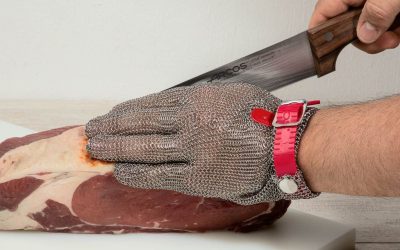
Professional knives for the meat industry: how to improve productivity, safety, and cutting performance
En mataderos, salas de despiece y plantas de procesado, el cuchillo no es un accesorio: es una herramienta crítica de producción. Elegir el adecuado impacta directamente en costes, eficiencia y seguridad.
7 everyday problems Arcos B2B solves for you (and how)
In retail, horeca or distribution, everyone says the same thing: time is scarce, manual tasks keep piling up and any mistake in orders, invoices or stock quickly turns into a fire to put out.
The Arcos B2B portal is designed precisely to tackle those pain points one by one and turn them into simple, fast and traceable processes.
Arcos B2B: a service designed to support every professional customer, step by step
Discover how the Arcos B2B portal and its dedicated team combine technology and human interaction to offer every professional customer close, agile, and tailored support in their day-to-day operations.